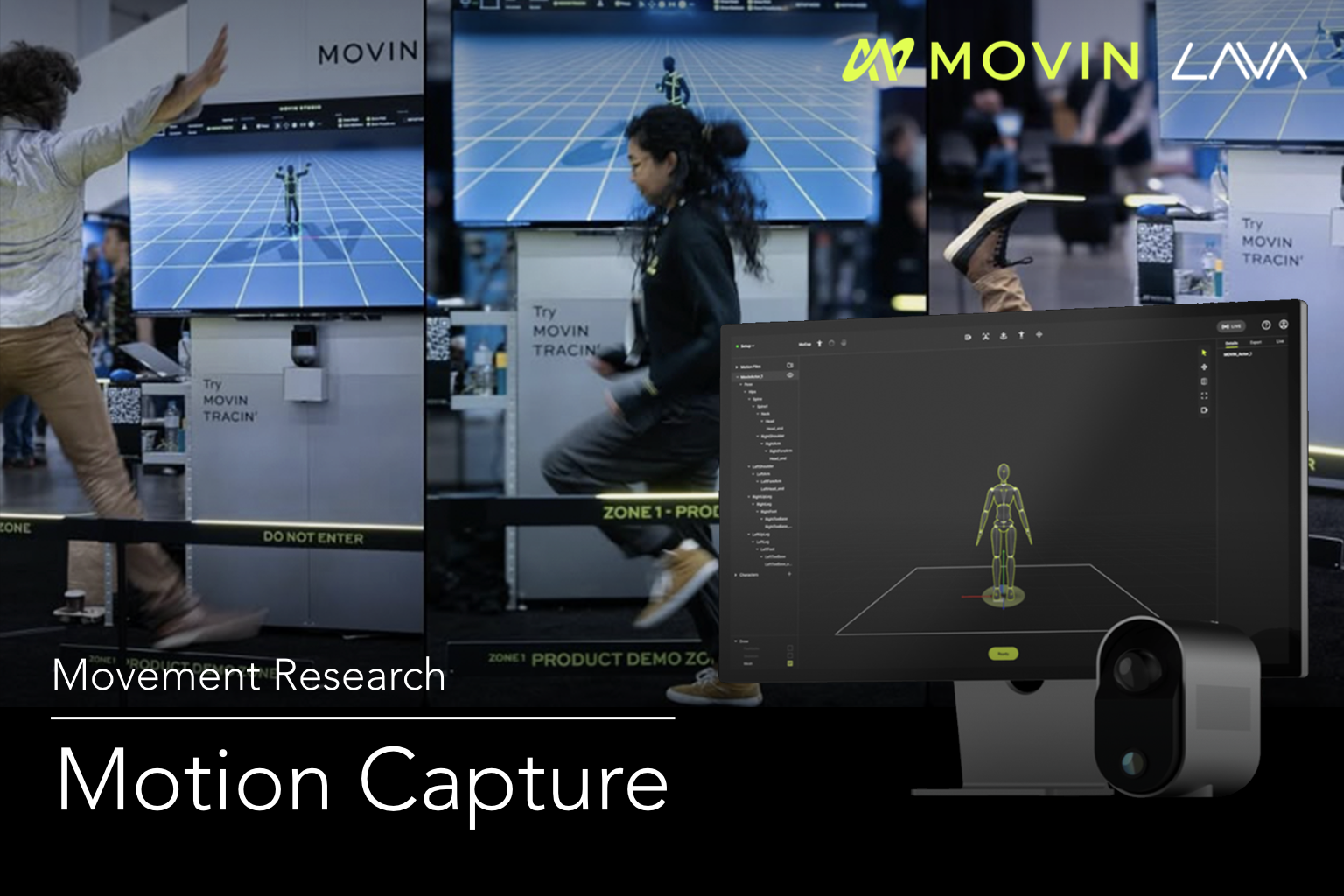
How can we make motion capture easier, faster, and more accessible to everyone? Traditional motion capture (MoCap) systems depend on wearable sensors or multi-camera setups, which are costly, require extensive calibration, and often constrain natural movement. Our research aims to democratize motion capture—taking it beyond professional studios and making it accessible to creators, developers, and performers alike. Motion capture is a foundational technology in areas such as virtual avatars, gaming, film, live performance, and immersive interaction. Yet, existing systems still limit who can use it and how freely they can move. We are developing methods to estimate full-body human motion using only accessible devices like VR headsets. While these devices provide a sparse set of sensing signals from just a few points, they offer a practical and affordable entry point for motion capture.
By leveraging deep learning, we aim to reconstruct complete body movements—including complex scenarios like human-human and human-object interactions—from these limited inputs. Our goal is to unlock the full potential of motion capture for everyone, everywhere.
Recent papers
- ELMO: Enhanced Real-time LiDAR Motion Capture through UpsamplingD-K Jang*, D. Yang*, D-Y Jang*, B. Choi*, D. Shin, and S-H Lee, ACM Transactions on Graphics (Proc. SIGGRAPH ASIA), Dec. 2024 [Paper] [Project]
- DivaTrack: Diverse Bodies and Motions from Acceleration-Enhanced Three-Point Trackers, D. Yang, J. Kang, L. Ma, J. Greer, Y. Ye, and S-H Lee, Computer Graphics Forum (Proc. Eurographics), Apr. 2024 [paper][demo]
- MOVIN: Real-time Motion Capture using a Single LiDAR, D-K Jang*, D. Yang*, D-Y Jang*, B. Choi*, T. Jin, and S-H Lee, Computer Graphics Forum (Proc. Pacific Graphics), Sep. 2023 [project]
- LoBSTr: Real-time Lower-body Pose Prediction from Sparse Upper-body Tracking Signals, D. Yang, D. Kim, and S-H Lee, Computer Graphics Forum (Proc. Eurographics), May. 2021 [project]
- Projective Motion Correction with Contact Optimization, S. Lee and S-H Lee, IEEE Transactions on Visualization and Computer Graphics (TVCG), Mar. 2018 [project]